

Tarot cards are everywhere today — in bookshops, on social media, tucked into the bags of people you might never expect. But behind the modern tarot renaissance lies a history that is far richer, more complex, and more surprising than most people realize.
The story of tarot spans more than six centuries, crossing from the courts of Italian nobility into secret occult societies, through the hands of traveling fortune-tellers, and into the living rooms and spiritual practices of millions of people worldwide. Understanding that history doesn’t just satisfy curiosity — it can genuinely deepen your relationship with the cards themselves.
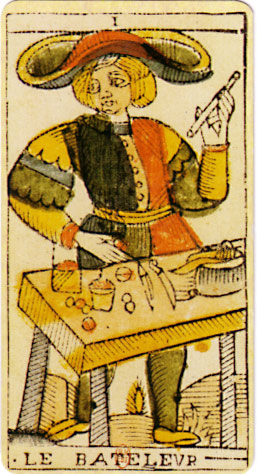
Origins of Tarot Cards
Playing cards arrived in Europe from the East, likely via trade routes through the Islamic world, sometime in the late 14th century. Standard card decks using four suits were already well established by the early 1400s when something new began to emerge in the courts of northern Italy: illustrated cards featuring rich allegorical imagery and symbolic figures.
Around 1420, a humanist scholar named Martiano da Tortona described a remarkable pack of 16 illustrated playing cards commissioned for the Duke of Milan, depicting images of Greek gods rather than conventional suit symbols. This was an early sign that visual symbolism would soon become central to card culture in Italy — and eventually, the world.
The Visconti Family Cards
The tarot as we recognize it today — a 78-card deck with numbered suits and a set of illustrated trump cards — first appeared in northern Italy in the mid-15th century. Some of the earliest surviving examples were created for the powerful Visconti and Sforza families of Milan.
Several notable decks were commissioned for these families. The Cary-Yale Tarot, created between 1442 and 1447, is among the oldest surviving examples. A second famous deck — now known as the Visconti-Sforza tarot — was likely created around 1450 to celebrate a dynastic marriage. Its beautifully gilded, hand-painted cards depict allegorical figures that any modern tarot reader would recognize immediately: The Emperor, The Empress, The Fool, and more. Historians generally attribute this deck to Bonifacio Bembo or Francesco Zavattari, though the attribution remains a matter of scholarly debate.
Crucially, these early tarot decks were not used for divination. They were playing cards, used in a competitive game of trumps not entirely unlike bridge. The trump cards we now call the Major Arcana were simply the high-ranking cards in that game. The idea of using them as a spiritual or divinatory tool came significantly later.
Tarot Cards Were Limited to the Upper Class
Throughout much of the 15th century, tarot decks were extraordinarily expensive and rare. Each card was meticulously hand-painted by skilled artists using costly pigments and gold leaf — a process that required significant time, skill, and resources. As a result, tarot decks were almost exclusively owned by the aristocracy, used largely for entertainment and as symbols of wealth and cultural sophistication.
The broader population had little or no access to these objects. That was about to change thanks to one of the most consequential inventions in human history.
The Printing Press
The invention of movable-type printing by Johannes Gutenberg in the mid-15th century transformed the world of cards just as profoundly as it transformed the book trade. For the first time, illustrated cards could be produced in quantity at a cost that made them accessible beyond the nobility, and tarot began to spread across Europe in new ways.
By 1540, a book called The Oracles of Francesco Marcolino da Forlì had documented a card-based method of divination using tarot cards. This was one of the earliest recorded instances of cards being used deliberately for fortune-telling rather than gameplay — a significant turning point in the history of tarot.
Tarot Enters the World of Occultism
The pivotal shift in tarot’s identity — from card game to spiritual tool — happened decisively in 18th-century France. In 1781, a Swiss clergyman and Freemason named Antoine Court de Gébelin published an influential essay claiming that the tarot’s imagery encoded the secret wisdom of ancient Egypt. This claim was almost certainly historically inaccurate, but it was enormously powerful. Educated Europeans fascinated by esotericism seized on the idea, and tarot became firmly associated with mysticism, symbolism, and occult practice.
French occultists began developing elaborate symbolic systems around the cards, connecting them to astrology, numerology, Kabbalah, and Hermetic philosophy. The tarot had found a new home — and a new purpose.
The Rider-Waite-Smith Deck: A Turning Point
In 1909, British occultist Arthur Edward Waite collaborated with artist Pamela Colman Smith to produce what would become the most influential tarot deck in history. Published by the Rider Company, the Rider-Waite-Smith deck was revolutionary for one key reason: for the first time, all 78 cards — including the 56 Minor Arcana — featured fully illustrated scenes rather than simple pip symbols.
This made the cards dramatically more accessible for intuitive reading. Instead of counting abstract symbols, readers could look at a fully realized scene and feel into its meaning immediately. The imagery of the Rider-Waite-Smith deck became the foundation for hundreds of subsequent decks, and it remains the standard reference point for tarot readers and students around the world today. When you think of a tarot card, it’s almost certainly this deck’s imagery you’re picturing.
Tarot Today
The 20th century saw tarot move from occult parlors into mainstream culture, accelerating through the 1960s and 1970s as new decks — including Aleister Crowley’s Thoth Tarot — brought fresh perspectives to the tradition. By the 1980s and 1990s, tarot had found its way into bookshops, metaphysical stores, and the hands of a new generation of curious seekers across the English-speaking world.
Today, tarot is experiencing a genuine cultural moment. Hundreds of new decks are published every year, reflecting an extraordinary diversity of artistic styles, cultural perspectives, and philosophical approaches. Social media has brought tarot to millions of new practitioners, many of whom use it not for fortune-telling in the traditional sense, but as a reflective tool for self-understanding, journaling, and personal growth.
The core structure of the tarot — 78 cards divided between the Major and Minor Arcana — has remained essentially unchanged across six centuries, even as the culture around it has evolved dramatically. That continuity speaks to something enduring in the cards: a symbolic language that keeps finding new meaning for new generations.
If you’re curious about what the cards might reveal for you, a free tarot reading is a wonderful place to begin.
Photo Credit: Jerome Charles Potts
Get a Tarot Reading …
Get a LIVE TAROT READING Right Now -> Free Minutes!
(Remember, you get Free Minutes on your first reading.)
