

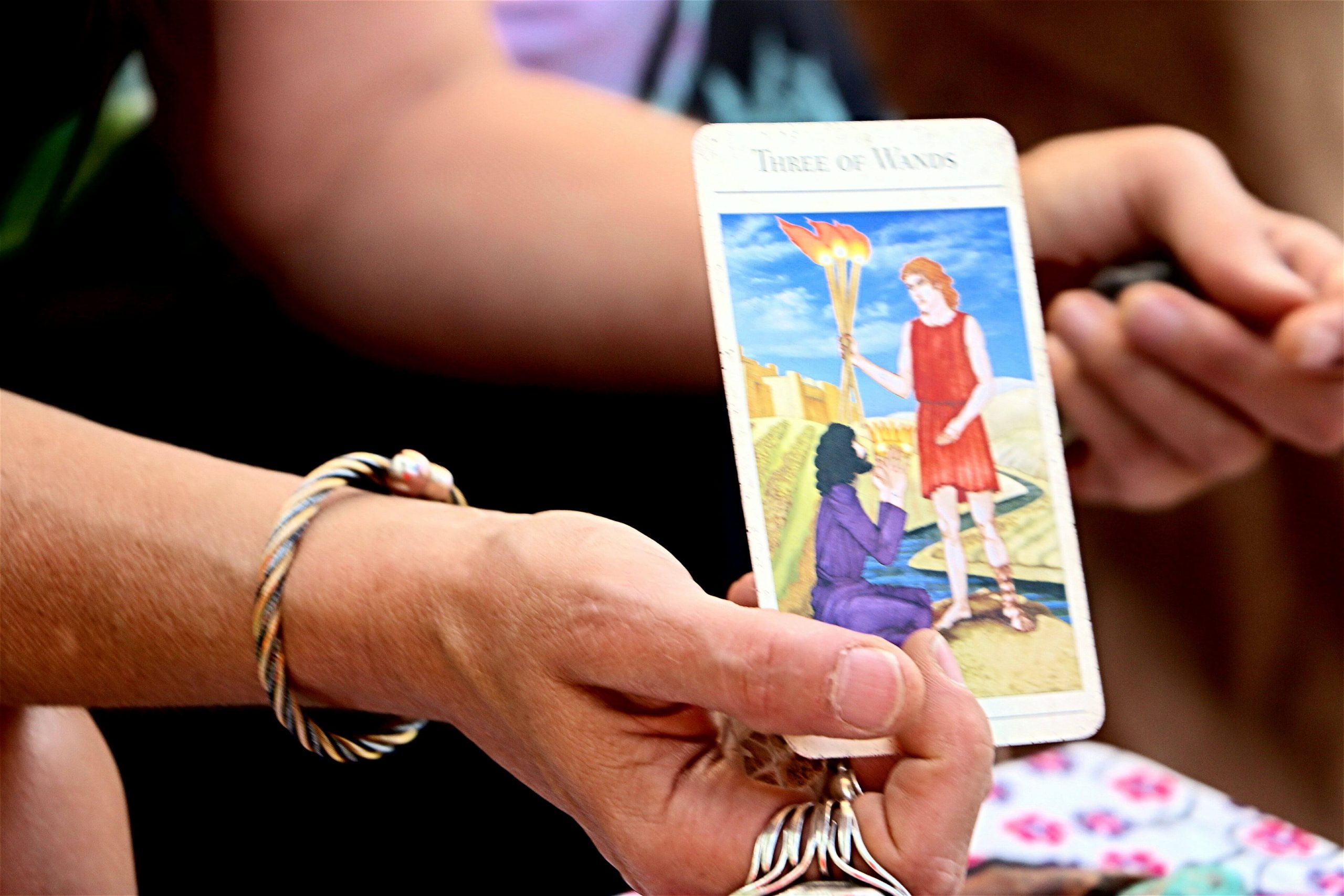
Not sure which tarot spread to use or how to read the layout once the cards are down? This guide walks through the five most widely used spreads, how to set them up, and what each position is really asking you to look at.
A tarot spread is the pattern in which cards are laid out during a reading, with each position assigned a specific meaning before the cards are drawn. The spread doesn’t change what the cards say — it shapes the context through which you read them. Choosing the right spread for your question is one of the most practical skills you can develop as a reader.
Here are five of the most widely used spreads, along with guidance on when to use each and how to get the most from the layout. If you’re new to the process, our step-by-step guide to tarot readings is a good starting point before diving into spreads.
1. Three-Card Spread: Past, Present, Future
The Three-Card Spread is the workhorse of tarot — simple, versatile, and effective for almost any question. Three cards laid side by side from left to right provide a concise snapshot of where you’ve been, where you are, and where you’re heading.
Layout: Shuffle the deck while holding your question in mind. Draw three cards and place them in a row, left to right.
Interpretation: Card 1 (left) represents past influences still shaping the situation. Card 2 (center) reflects the current circumstances and energies at play. Card 3 (right) indicates potential future developments or the direction things are heading if the current energy continues.
Best for: Quick clarity on a specific situation, daily check-ins, understanding how a past event is influencing the present, or any moment when you need a focused snapshot rather than a deep dive. This is the ideal spread to start with if you’re new to tarot.
2. Celtic Cross Spread: Comprehensive Insights
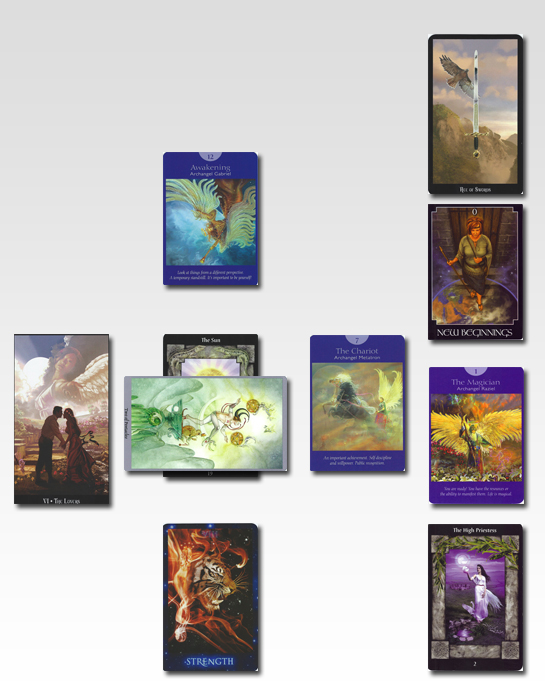
The Celtic Cross is the most widely recognized and comprehensive spread in tarot. Ten cards placed in a specific pattern provide an in-depth view of a situation from multiple angles: what’s happening now, what’s influencing it from within and without, what’s in the background, and where things are heading.
Layout: Shuffle and draw ten cards, placing them as follows:
- Card 1 (center): The heart of the matter — the current situation.
- Card 2 (crossing): What is challenging or complicating the situation.
- Card 3 (above): Conscious goals, aspirations, or the best possible outcome.
- Card 4 (below): The foundation — subconscious influences or root causes.
- Card 5 (left): Recent past events that are still relevant.
- Card 6 (right): The near future — what is approaching.
- Card 7: The querent’s attitude and relationship to the situation.
- Card 8: External influences — other people or environmental factors.
- Card 9: The querent’s hopes or fears connected to the situation.
- Card 10: The likely outcome if present energies continue.
Interpretation: The Celtic Cross rewards careful attention to how the cards interact. Card 9 (hopes/fears) is often particularly revealing — it shows what the querent is projecting onto the situation emotionally. Always read Card 10 in light of the whole spread rather than in isolation.
Best for: Complex situations with multiple factors, general life overviews, or any reading where you need a full picture rather than a focused answer.
Celtic Cross Example Layout
3. Relationship Spread: Love and Connections
The Relationship Spread is designed specifically to illuminate the dynamics between two people — their perspectives, the strengths in their connection, what challenges are present, and where the relationship may be heading.
Layout: Draw five cards and place them as follows:
- Card 1: The querent’s current feelings and perspective on the relationship.
- Card 2: The other person’s perspective or current emotional state.
- Card 3: The strengths or positive forces within the relationship.
- Card 4: The challenges or obstacles the relationship is currently facing.
- Card 5: The potential direction or outcome if things continue as they are.
Interpretation: Pay particular attention to whether Cards 1 and 2 feel complementary or in tension. When the two perspectives are very different, that gap often holds the key to understanding the relationship’s central dynamic.
Best for: Romantic relationships, friendships, or any significant interpersonal situation where you want to understand both sides of the dynamic.
4. Decision-Making Spread: Weighing Options
When facing a significant crossroads, the Decision-Making Spread helps clarify what each path looks like and where each might lead — without making the decision for you.
Layout: Draw six cards and place them as follows:
- Card 1: The situation and the decision at hand.
- Card 2: The potential outcome or consequence of Option A.
- Card 3: The potential outcome or consequence of Option B.
- Card 4: The strengths or advantages of Option A.
- Card 5: The strengths or advantages of Option B.
- Card 6: Overall guidance or the factor the querent most needs to consider.
Interpretation: Card 6 often provides the clearest directional message, but it should be read alongside the full spread. Sometimes the strongest guidance comes from noticing which option’s cards feel more aligned with where the querent actually wants to be — not just what seems “practical.”
Best for: Career decisions, major life changes, relationship choices, or any situation with two clearly defined paths to consider.
5. Horseshoe Spread: Addressing a Specific Concern
The Horseshoe Spread is one of the most adaptable multi-card layouts. Its seven-card semi-circle structure provides a rounded exploration of any specific concern — covering past, present, and future alongside the querent’s attitude, external influences, and overall guidance.
Layout: Draw seven cards and arrange them in a semi-circle as follows:
- Card 1: Past influences or factors that led to the current situation.
- Card 2: The current circumstances or the heart of the concern.
- Card 3: The likely near-future development or potential outcome.
- Card 4: The querent’s attitude toward the situation — conscious or unconscious.
- Card 5: External influences or other people impacting the situation.
- Card 6: The querent’s hopes or fears in relation to the concern.
- Card 7: Overall advice or the most important thing to keep in mind.
Interpretation: The Horseshoe provides more nuance than the Three-Card Spread while remaining more focused than the Celtic Cross. Card 4 (attitude) and Card 6 (hopes/fears) are often the most psychologically revealing positions in this layout.
Best for: A specific ongoing concern, a situation that feels stuck, or any question where you want more context than three cards provide but don’t need the full scope of a Celtic Cross.
Conclusion
The spread is the container; the cards are the content. As you practice with each of these layouts, you’ll develop a feel for which spread suits which kind of question — and that instinct itself is part of developing as a reader. Start simple, practice consistently, and trust the process.
You can also create your own tarot spreads once you feel comfortable with established layouts — designing a spread for a specific situation is a meaningful creative exercise in itself.
Frequently Asked Questions
Can I create my own tarot spreads?
Absolutely. Designing a custom spread — with positions tailored specifically to your question or theme — is one of the most rewarding practices in tarot. The key is to define each position’s meaning clearly before drawing, so the reading has a consistent interpretive framework.
Can tarot spreads provide definitive answers?
No — and that’s intentional. Tarot readings illuminate current energies and possible trajectories based on where things stand right now. Because free will and circumstances both shift, the cards offer guidance rather than fixed outcomes. A reading that feels definitive is best treated as a strong signal worth serious reflection, not a sealed verdict.
How often should I use the same spread?
As often as it serves the question you’re bringing. Some readers use the same spread in every session; others rotate based on what they’re exploring. The more relevant question is: does this spread give me the kind of perspective this particular situation needs? If yes, use it. If not, try a different layout.
This article was last updated in April 2026.