

When you receive a tarot card reading, the deck is being asked to reveal something specific about a specific person in a specific moment. One of the oldest tools for ensuring that clarity is the significator — also written as signifier — a card chosen to represent the person being read for before the reading even begins.
Not every reader uses a significator, and not every spread requires one. But understanding what the significator is, how it’s chosen, and what it contributes to a reading can deepen your appreciation of tarot as a whole — whether you’re having your cards read by a professional or exploring the practice yourself.
What Is a Significator Card?
A significator is a single card drawn from the tarot deck and set apart before the reading begins to represent the person asking the question — called the querent. It functions as an anchor: a symbolic focal point that tells the deck (and the reader) whose story is being explored.
Think of it like addressing an envelope before you send a letter. Without it, the reading is still possible, but the significator helps ensure the information that surfaces is genuinely oriented toward the right person and the right situation.
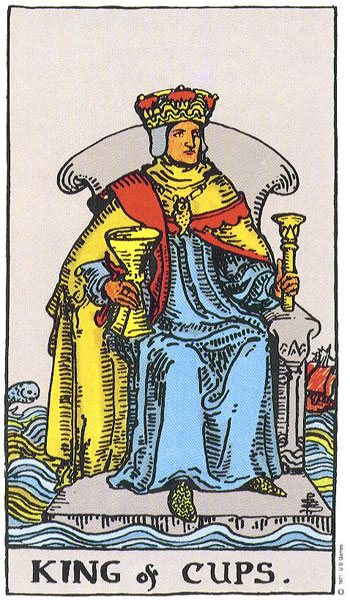
The significator can be any of the 78 cards in a standard tarot deck — Major Arcana or Minor Arcana — though in most traditional approaches, it is a court card: a King, Queen, Knight, or Page. It is not drawn randomly; instead, it is chosen deliberately, by either the reader or the querent, based on specific criteria about who the querent is.
How Is the Significator Chosen?
There are several approaches to choosing a significator, and different readers and traditions favor different methods. Here are the most widely used:
By Age and Gender
The traditional court-card method assigns significators based on the querent’s approximate age and gender. Queens typically represent adult women; Kings represent adult men. Knights have traditionally been used for younger men or teenagers, and Pages for children or people who are new to a situation. Some readers apply this framework flexibly, choosing Queen or King for any adult regardless of gender, and Knight for anyone in a transitional or apprentice phase of life.
By Astrological Sign or Elemental Suit
Each suit in the Minor Arcana corresponds to one of the four elements, and those elements map onto the astrological signs. The suit of Wands corresponds to fire signs (Aries, Leo, Sagittarius); Cups to water signs (Cancer, Scorpio, Pisces); Swords to air signs (Gemini, Libra, Aquarius); and Pentacles to earth signs (Taurus, Virgo, Capricorn). A reader using this method would choose a court card from the suit that matches the querent’s sun sign.
By Personality and Intuition
Some readers bypass the demographic or astrological frameworks entirely and choose the significator intuitively — selecting the card that most accurately captures the querent’s current energy, personality, or the particular role they’re playing in the situation being read. This method is more subjective but can produce strikingly resonant results in the hands of an experienced reader.
Occasionally, the querent themselves will be asked to select the card they feel most drawn to — a powerful approach that often surfaces the querent’s own intuitive understanding of how they see themselves in the situation.
What Does a Significator Actually Do?
The primary function of the significator is focus. In the hands of a skilled reader, a tarot spread can open up to an enormous amount of information. Without a clear anchor, some of that information may inadvertently pertain to people or situations peripheral to the querent. The significator keeps the reading centered on the person sitting in front of the reader.
Beyond this practical function, the significator also contributes meaningful interpretive information. Once placed, the reader may refer back to it throughout the session, reading the cards in the spread in relationship to it. How does the Seven of Cups relate to the Queen of Wands sitting at the center? What does the placement of this card near the significator say about the querent’s current inner state versus their outward situation? These relational readings add a layer of depth that a reading without a significator doesn’t have access to in the same way.
Do You Have to Use a Significator?
No. Many accomplished readers don’t use one routinely, and many spreads — including the Celtic Cross, one of the most widely used spreads in tarot — include a positional card that serves a similar function without requiring a pre-selected significator.
Whether to use a significator is ultimately a matter of the reader’s training, tradition, and intuition. Some readers find that it adds a useful layer of focus and intention to their sessions; others find they can achieve equivalent clarity without it. If you’re learning to read for yourself, it’s worth experimenting with both approaches and noticing whether the presence of a significator shifts the quality or character of your readings.
To explore the broader world of tarot spreads and how they work, check out our [link: guide to tarot spreads for beginners]. And if you’d like to experience a professional reading firsthand, you can connect with a live reader here at any time.
Photo Credit: Jason Chang
This article was last updated in April 2026.
Take the Next Step…
Get a LIVE READING Right Now -> Free Minutes!
(Remember, you get Free Minutes on your first reading.)
